You Can’t Do Celtman Alone. Neither Can You Do Life.
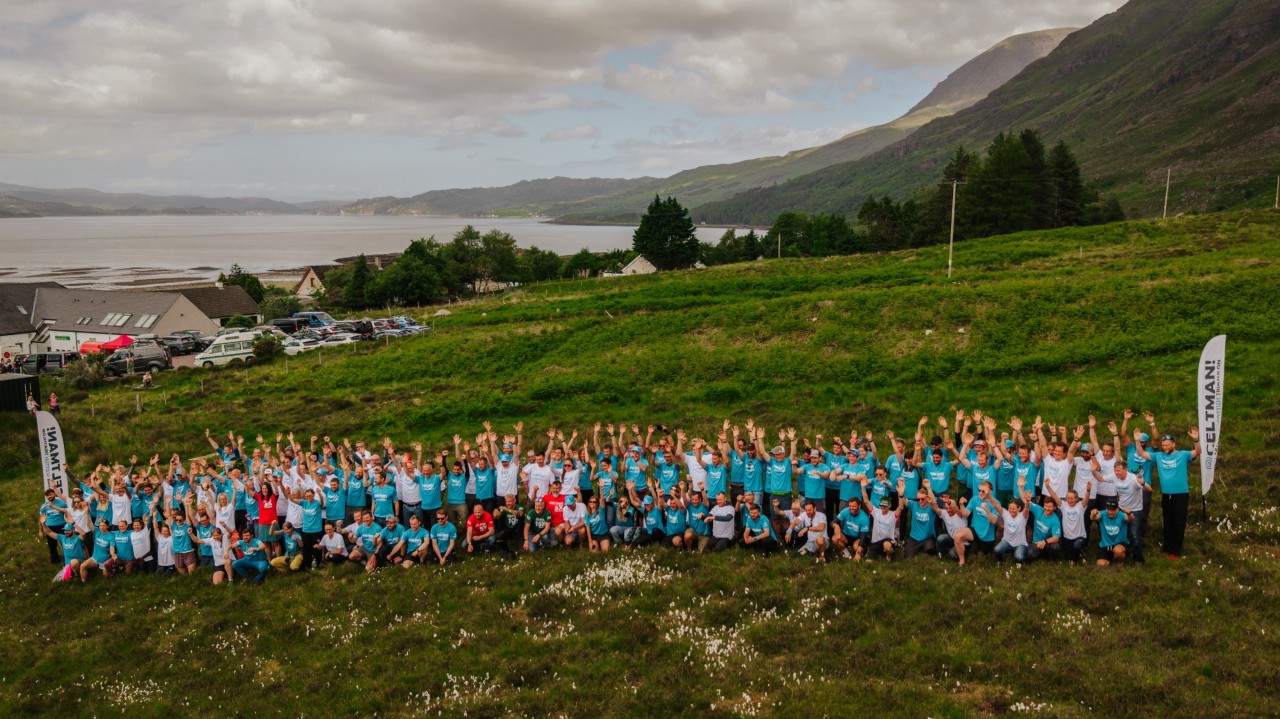
Last weekend, I completed CELTMAN! Extreme Scottish Triathlon.
On paper, it’s a simple enough concept: a 3.4km open-water swim, a 202km bike ride through the Scottish Highlands, and a marathon trail run to finish. In reality, it is widely regarded as one of the toughest endurance events in the world. This year, Scotland seemed determined to remind us why. According to the race directors, the swim was held in the coldest water temperatures in the event’s history. The iconic mountain high course had to be closed due to dangerous winds and near-zero visibility. The bike leg was dominated by relentless headwinds and unpredictable side gusts, while the run delivered knee-deep bogs, countless river crossings, persistent rain and permanently wet feet. It was, by all accounts, one of the harshest Celtman race days ever experienced.

Yet despite all of that, the biggest lesson I took away from the event wasn’t about resilience, determination, or grit. It wasn’t about endurance, training plans or crossing the finish line. It was about something much simpler: support. Because, unlike many races, Celtman recognises a truth that often gets overlooked elsewhere –
You cannot do it alone.
In fact, the rules don’t allow it. Every athlete must have a support crew. At first glance, that might seem like a practical requirement for safety and logistics across remote Highland terrain. Having now completed the event, I think it teaches a much deeper lesson. The race organisers understand that even the strongest athletes need support, encouragement and help along the way.
We often celebrate the myth of the self-made individual. We admire entrepreneurs who built successful businesses, leaders who transformed organisations, athletes who conquered extraordinary challenges and people who appear to achieve remarkable things through sheer force of will. Yet behind almost every visible success story sits an invisible team. There are partners, friends, colleagues, mentors, coaches and family members who quietly contribute in ways that rarely make the headlines. They provide encouragement when confidence wavers. They offer perspective when challenges seem overwhelming. They help solve problems, carry burdens and keep us moving when we’d rather stop. We often focus on the person standing on the podium while overlooking the people who helped them get the
For me, that person was my wife, Fay. While I was busy swimming, cycling and running, she was undertaking a challenge of her own. As my sole supporter, she spent the day driving around the Highlands, navigating road closures, monitoring timings, managing nutrition, sorting equipment and somehow keeping everything running smoothly. Every time I arrived at a support point, food and drinks appeared as if by magic. Spare kit was ready when needed. Encouragement arrived exactly when it was required. Problems were solved before I even knew they existed. Then, after spending the entire day supporting me, she joined me for the final 12 miles of the run.
Through the mountains, across rivers, through epic bogs and relentless rain, she ran alongside me, encouraging me every step of the way. By that stage of the day, my feet had been soaked for hours, my shoulders were aching from spending so much time on the tri-bars fighting relentless headwinds, and my enthusiasm for Scottish peat bogs and the midges had diminished significantly. Somehow, she remained positive, supportive and encouraging throughout. Where my name appears on the results sheet, the reality is that the finish belongs to both of us.

An additional dimension to the day was being accompanied by a film crew who were documenting my journey for the 2026 Celtman race film. The focus of the filming was my journey through Lyme disease, the challenges that have come with it, and the road back to taking on one of the toughest endurance events in the world. Knowing that the story was being captured created an unexpected sense of accountability. In my mind, I had already committed to finishing the race; there was simply no way I was going to spend months preparing, invite a film crew to follow me around Scotland, and then provide a documentary ending that consisted of me sitting in a wet ditch questioning my life choices. Every difficult moment came with the knowledge that somebody might be pointing a camera in my direction.

One of the major milestones in Celtman is making the “Blue T-shirt” cut-off. Athletes who reach the mountain section before the designated cut-off time earn the right to tackle the iconic high course and receive the coveted blue finisher’s T-shirt. Those arriving after the cut-off continue on the lower course and receive a white finisher’s T-shirt. With the extreme weather conditions this year, the mountain was ultimately closed for safety reasons, meaning nobody had the opportunity to go high. However, I was delighted to discover that I had made the Blue T-shirt cut-off time. While the weather prevented us from taking the high route, knowing I had reached that point within the required time felt like a significant personal achievement and validation of the preparation that had gone into the race.
The film itself tells a much bigger story than a single race day. It captures a journey that has included setbacks, uncertainty, unfinished business and learning to keep moving forward despite challenges that at times felt overwhelming. I’m genuinely excited to see the finished production and to relive not only the race itself but also the wider story that brought me to that start line in Shieldaig in the first place.

The more I reflected on the experience, the more I realised how closely this mirrors leadership. Throughout my career, I have worked with many successful leaders across healthcare, justice, employability and the voluntary sector. The best leaders I’ve encountered have never been the ones who tried to carry everything themselves. They weren’t the people who had all the answers or projected an image of invulnerability. Instead, they were the people who built strong relationships, trusted others, asked for help when needed and created environments where people could support one another. They understood that leadership is not about standing alone at the front. It is about recognising the value of those around you and creating the conditions for collective success. Strength is not demonstrated by carrying every burden yourself. Often, real strength comes from recognising when you shouldn’t.

This lesson feels particularly relevant when we consider wellbeing and mental health. Many of us, especially men, are still conditioned to believe that resilience means coping alone. We learn to minimise problems, dismiss concerns and answer “I’m fine” when the truth is often far more complicated. Yet some of the strongest people I know are those who have learned to reach out when they need support. They understand that vulnerability is not weakness. They recognise that asking for help is often one of the bravest things we can do. Whether we are navigating a health challenge, a difficult period at work, a major life transition or simply a tough week, support matters. We all need people who can encourage us, challenge us, listen to us and occasionally remind us that we are capable of more than we think.
Celtman taught me many things, but perhaps the most important lesson wasn’t found in the swim, the bike, or the run. It wasn’t in the freezing water, the relentless headwind, or the Highland bogs. It was in the simple recognition that nobody achieves anything truly meaningful alone. Behind every finish line, promotion, successful project, or personal achievement are people who helped make it possible. The challenge for all of us is not only to recognise those people but also to thank them. I crossed the finish line at Celtman, but I certainly didn’t get there alone. And perhaps that’s the most valuable lesson of all.