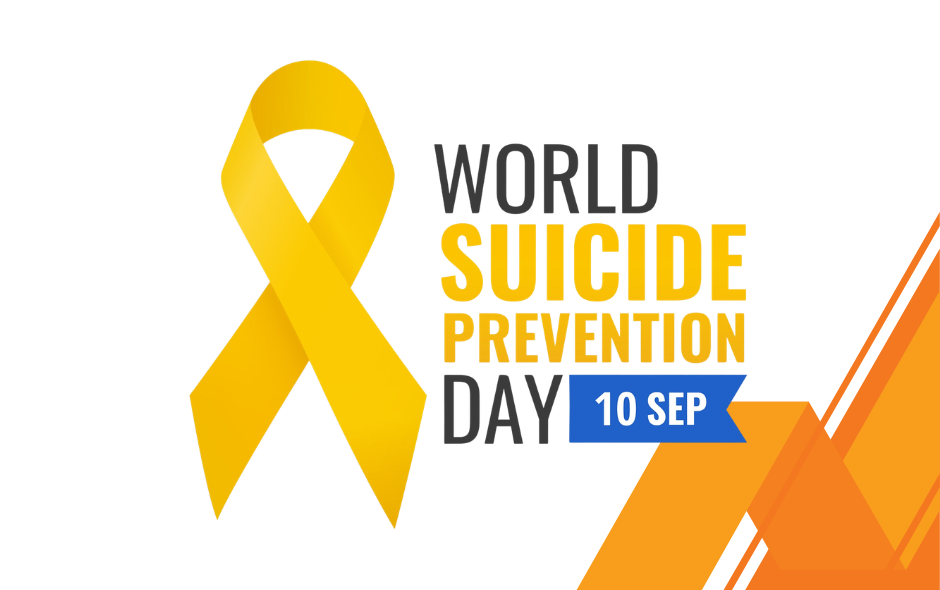
10th September marks World Suicide Prevention Day, which is regarded as an opportunity to talk openly about suicide, challenge stigma and consider what more we can do to support people who may be struggling.
Suicide can be an uncomfortable subject to talk about. For many people, there is uncertainty about what to say, fear of saying the wrong thing, or a belief that talking about suicide could make things worse.
This year’s World Suicide Prevention Day continues the three-year global theme “Changing the Narrative on Suicide”, with the call to action “Start the Conversation.” The campaign encourages us to move away from silence, stigma and misconceptions and towards more open, compassionate conversations about suicide and mental health.
For organisations supporting people with their mental health, wellbeing and employment, this message is particularly important.
Why talking about suicide matters
Suicide is a major global public health issue. The World Health Organization estimates that more than 720,000 people die by suicide every year worldwide, with the impact extending far beyond the individual to families, friends, colleagues and communities.
In England and Wales, 6,190 suicide deaths were registered in 2024, including 5,717 in England. The suicide rate in England was 11.1 deaths per 100,000 people. The North East had the highest suicide registration rate of any English region in 2024, at 15.1 per 100,000.
Behind every statistic is a person.
And while suicide is complex and there is rarely one single cause, difficult life circumstances can contribute to someone feeling unable to cope. These can include financial worries, relationship difficulties, isolation, bereavement, physical illness, mental health difficulties and pressures associated with work.
That is why prevention cannot simply be about responding when someone reaches crisis point. It also means creating environments where people feel able to speak before things reach that stage.
The workplace has a role to play
For many people, work is an important part of daily life. It can provide routine, purpose, social connection and financial security.
But work can also be a source of significant pressure.
Job insecurity, excessive workloads, workplace stress, bullying, discrimination and difficult organisational change can all contribute to poor mental health and, in some circumstances, suicidal thoughts. The Health and Safety Executive (HSE) highlights the responsibility employers have to protect workers’ health, safety and welfare, including addressing risks to mental health and work-related stress.
This doesn’t mean employers are expected to diagnose or treat mental health conditions.
It means creating a workplace where people can say “I’m struggling” without feeling ashamed, judged or worried about the consequences.
Practical steps can include:
- Making mental health support easy to find and access.
- Training managers to recognise when someone may be struggling.
- Encouraging regular, meaningful conversations about wellbeing.
- Taking work-related stress seriously.
- Addressing bullying, harassment and discrimination.
- Offering reasonable flexibility where appropriate.
- Signposting employees towards professional support.
- Keeping communication open when someone is experiencing difficulties.
The HSE recommends measures such as flexible working arrangements, time to attend counselling or medical appointments, access to appropriate support and creating a culture where mental health can be discussed openly.
NHS England has also developed a national suicide prevention toolkit specifically for the NHS workforce, recognising the importance of embedding suicide prevention within organisational health and wellbeing strategies.
Knowing when someone might be struggling
There isn’t a single appearance or behaviour that tells us someone is experiencing suicidal thoughts.
Someone may become withdrawn, stop responding to messages, struggle with everyday tasks, seem unusually tired or distracted, lose interest in things they normally enjoy, or talk about feeling hopeless, worthless or trapped.
However, some people may show very few outward signs at all.
That’s why we shouldn’t rely solely on spotting a checklist of warning signs.
Instead, we can get better at checking in with the people around us.
A simple:
“You don’t seem quite yourself. How are you doing?”
can open the door to a much bigger conversation.
Is it OK to ask someone if they’re suicidal?
Yes.
One of the most important myths to challenge is that asking someone about suicide will put the idea into their head or make the situation worse.
Evidence and guidance from Samaritans indicates that asking someone directly about suicidal thoughts can actually give them permission to talk about how they are feeling and help them feel less alone.
You don’t need to be a mental health professional to start a conversation.
You could say:
- “I’ve noticed you’ve not seemed yourself recently. How are you doing?”
- “You seem like you’re having a really difficult time. Do you want to talk?”
- “Are you having thoughts about suicide?”
If someone says yes, you don’t need to have all the answers.
Listen. Take them seriously. Stay calm. Avoid judgement. Encourage them to access appropriate support.
You don’t need to fix everything for someone in one conversation. Sometimes, simply giving someone the space to say what they are experiencing can be an important first step.
Changing the narrative means changing our approach
Changing the narrative around suicide isn’t about having one conversation on 10 September and then moving on.
It’s about creating a culture where conversations about mental health are normal throughout the year.
For employers, that might mean making wellbeing part of everyday management rather than an occasional initiative.
For employment and health professionals, it can mean considering the whole person rather than focusing solely on employment outcomes.
For colleagues, friends and family members, it can mean checking in rather than assuming someone is okay.
And for all of us, it can mean becoming more comfortable with difficult conversations.
We don’t need to have the perfect words. We just need to be willing to start.
Supporting people beyond the point of crisis
With the work that we do, we know that mental health and employment are closely connected.
Supporting someone towards employment isn’t simply about helping them find a job. Sustainable employment also depends on wellbeing, confidence, stability and having the right support around an individual.
That is why conversations about mental health need to sit alongside conversations about employment, inclusion and long-term wellbeing.
Suicide prevention is everyone’s responsibility — but no individual should be expected to manage it alone.
Professional support, appropriate clinical intervention and effective workplace processes all have an important role to play.
If you are worried about someone
If someone tells you they are experiencing suicidal thoughts, take them seriously and encourage them to access appropriate support.
If you believe someone is in immediate danger, call 999 or take them to A&E.
In England, you can also contact NHS 111 for urgent mental health support. Samaritans can be contacted free, day or night, on 116 123.
You can also contact Samaritans if you’re worried about someone else. You don’t have to wait until you know exactly what to say or whether the situation is “serious enough”.
Start the Conversation
World Suicide Prevention Day reminds us that prevention isn’t just about responding to a crisis.
It’s about connection, compassion, early support and creating environments where people feel able to speak honestly about how they are feeling.
Check in with a colleague.
Make time for a conversation.
Listen without judgement.
And make sure people know where they can find help.
Because changing the narrative starts with changing the way we talk.
Further support
- Samaritans – Support for someone experiencing suicidal thoughts
- NHS – Help for suicidal thoughts
- Health and Safety Executive – Suicide prevention in the workplace
- NHS England – Working together to prevent suicide in the NHS workforce